Vitamin Deficiency and Crepey Skin on Hands: What the Research Actually Shows


A common search query among women in their forties and fifties — vitamin deficiency crepey skin hands — reflects a reasonable hypothesis: skin is a metabolically active tissue, vitamins play documented roles in its maintenance, and something has clearly changed. The hypothesis is not wrong. But the popular framing of it — find the missing vitamin, take more of it, watch the crepey skin improve — oversimplifies what the research actually shows about how structural skin proteins are produced and maintained over time.
This article is an attempt to give a more complete picture: what vitamins genuinely contribute to skin structure, why crepey skin on the dorsum of the hands appears even in women eating adequate diets, and what the science suggests about supporting skin structure when the issue isn't straightforward deficiency.
What role vitamins actually play in skin structure
Several micronutrients have mechanistically documented relationships with skin collagen — the primary structural protein of the dermis, which gives skin its thickness, firmness, and resistance to crepey texture.
Vitamin C (ascorbic acid) — a required cofactor for prolyl and lysyl hydroxylase, two enzymes that stabilize the collagen triple helix during synthesis. Without adequate vitamin C, newly assembled collagen is structurally weaker and more prone to degradation. This is the basis of scurvy's dermal symptoms — not vitamin C's antioxidant role, but its enzymatic one. Research consistently identifies vitamin C as one of the most mechanistically direct nutritional inputs to collagen quality.
Copper — required by lysyl oxidase, the enzyme that cross-links collagen and elastin fibers after they are assembled, creating the organized mesh that provides structural integrity and skin recoil. Without copper, fibers are produced but lack the cross-linking that makes the network functional. Studies on copper's role in connective tissue are well-established in the biochemistry literature.
Zinc — functions in matrix metalloproteinase regulation, influencing the rate at which existing collagen is broken down. Zinc status also affects keratinocyte proliferation and the broader repair cycle in skin. It is a supporting nutrient in the collagen maintenance picture rather than a primary assembly cofactor.
Biotin — often cited in skin and nail health discussions; its role in skin is less directly tied to collagen assembly than vitamin C or copper, but it participates in fatty acid synthesis relevant to the skin barrier and has documented effects on nail and hair keratin structure.
These are real, mechanistic relationships — not supplement marketing. The question is what "vitamin deficiency" means in the context of crepey skin, and whether taking more of any single vitamin addresses the actual source of the problem.
Why "deficiency" is the wrong frame for most women over 40
Clinical deficiency — the kind that produces scurvy, pellagra, or other diagnosable nutrient-deficiency diseases — is rarely the source of skin changes in women eating varied diets in developed countries. That is a good thing. But it creates an explanatory gap: if you're not clinically deficient, why is the skin on the back of your hands changing?
The answer lies in understanding what happens to collagen production as a system over time — not just as a function of nutrient intake.
Fibroblasts — the dermal cells responsible for producing collagen — begin showing age-related reductions in activity from the mid-twenties. By the late thirties and early forties, this accumulated decline becomes visible in areas where the structural reserve was always thin. The production rate slows, the degradation rate stays relatively constant, and the balance tips toward net loss of dermal volume.
This is not primarily a deficiency problem. It is a rate problem: fibroblasts are still running, but running slower, and the enzymatic chains that produce collagen require optimal cofactor availability to run at whatever capacity remains. Suboptimal cofactor status — not deficiency, but below the optimal range for active tissue production — is where nutritional support has the most mechanistic argument.
The distinction matters because it shifts the target. The goal is not to correct a clinical deficiency but to optimize the cofactor environment available to fibroblasts that are still producing, so that the collagen they do produce is assembled correctly and organized efficiently.
Why hands show crepey texture before other areas
Several anatomical factors converge to make the dorsum of the hand disproportionately vulnerable to visible collagen loss:
- Thin dermis from baseline. The dermis on the back of the hand is measurably thinner than in areas like the face or abdomen. A smaller structural reserve means the visible threshold for collagen loss is reached faster and at a lower absolute rate of decline.
- Minimal subcutaneous fat. Unlike the face, the dorsum of the hand has almost no fat layer underneath the skin. As the dermis thins, veins and tendons become visible and the skin loses the plump appearance that subcutaneous cushioning provides elsewhere in the body.
- Cumulative UV exposure with no protection. Hands are among the most consistently UV-exposed body surfaces across a lifetime of driving, outdoor activity, and daily exposure. UV radiation accelerates collagen degradation through photooxidative mechanisms — and the cumulative dose on unprotected hand skin over decades is substantially higher than most women realize.
- Low sebaceous gland density. The back of the hand has fewer oil-producing glands than the face, resulting in less natural surface lipid protection and compounding the structural changes with a surface-level dryness component that worsens the visual texture.
The combination of thin structural baseline, no fat cushion, high UV burden, and low sebum production creates an area where the collagen maintenance system has the least tolerance for decline. Crepey texture appears here first not because something went wrong uniquely in the hands, but because the margin for absorbing normal age-related change was always smallest there.
The limits of topical approaches for hand skin
Hand creams and topical moisturizers address the stratum corneum — the outermost layer of the epidermis. Well-formulated products can measurably improve surface hydration, temporarily plumping this outermost layer and softening the appearance of fine texture. For many women, this is a visible improvement that lasts hours before the skin reverts.
The reason for the reversion is anatomical. The stratum corneum is in the epidermis; crepey texture originates in a depleted dermis below it. Topical ingredients do not reliably penetrate to the dermis — skin evolved as a barrier, and it performs this function even against substances we apply intentionally. The structural deficit and the location of topical intervention are in different tissue layers.
This is not a critique of topical products; it is a statement of their physiological limits. For addressing surface hydration and texture, they are appropriate. For supporting the production of structural collagen in the dermis, a systemic nutritional approach has the more mechanistically coherent argument.
What nutritional support may help — and what the evidence supports
The research on oral nutritional support for skin collagen is growing. Studies examining vitamin C supplementation and skin collagen parameters, and trials of collagen peptides alongside cofactors, have generally shown favorable effects on skin elasticity and hydration markers — though effect sizes vary and study populations differ. The mechanistic argument is clearer than the clinical trial evidence, which is still building in this area.
The most supported targets from a mechanistic standpoint are the enzymatic cofactors: vitamin C and copper for the collagen assembly enzymes, zinc for the regulatory side of collagen turnover, and antioxidant support to protect existing structural proteins from oxidative degradation — which is particularly relevant in chronically UV-exposed tissue like hand skin.
What we suggest looking into
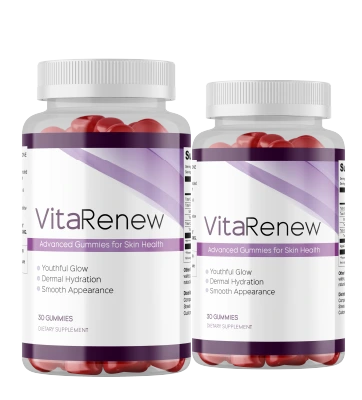
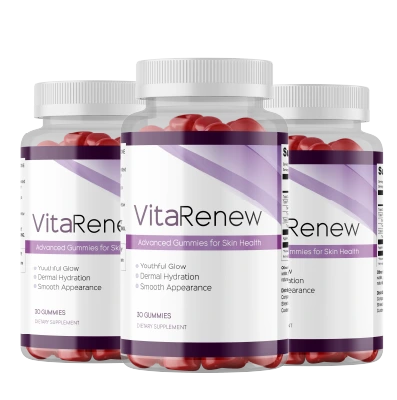
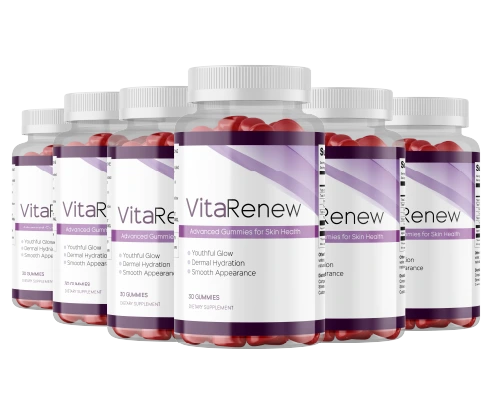
VitaRenew is a daily collagen-support gummy formulated for women 40 and over. Its formulation targets the enzymatic bottlenecks described above — vitamin C and copper for collagen assembly and cross-linking, zinc for ongoing skin integrity and protection — rather than delivering collagen peptides, whose bioavailability as intact structural protein is limited by digestive metabolism.
- Vitamin C & copper — cofactors for the two primary enzymes in collagen assembly and cross-link formation
- Zinc & antioxidant support — for regulation of collagen turnover and protection of existing structural proteins in UV-damaged tissue
- Daily gummy format — designed to remove compliance barriers; consistent daily intake is what allows nutritional support to accumulate
It is a supplement, not a therapeutic product, and individual responses vary. The scientific argument is strongest for women who have already optimized their topical routine and found it insufficient — which is precisely what the anatomy of hand skin predicts. For a low-commitment first look, the 2-bottle starter pack offers a 60-day window: enough time to let cofactor levels normalize and observe whether skin texture responds.
What women report
"I'd read the vitamin deficiency articles and tried supplements piecemeal for over a year. Nothing made a consistent difference. Eight weeks into VitaRenew the texture in my hands is noticeably different — thicker feeling, less of the paper-thin look. I wish I'd found something coherent earlier."
"The explanation here actually matched what I'd observed — creams help temporarily and then revert. Something systemic was always what made more sense. After two months of VitaRenew my hands look younger than they have in years."
These statements reflect individual experiences. Results are not typical and will vary from person to person.
The clearer picture
Crepey skin on the hands is not primarily a vitamin deficiency condition in the clinical sense. It is a structural change in a tissue that was always anatomically thin, has been cumulating UV damage for decades, and is now experiencing the visible output of an age-related decline in fibroblast production rate — a process where cofactor availability influences how efficiently the remaining capacity is used. The most mechanistically coherent nutritional approach is not mega-dosing a single vitamin, but optimizing the full enzymatic environment: vitamin C, copper, zinc, and antioxidant support working together. That is the problem VitaRenew was designed to address.