Skin Health · Explainer
What Causes Crepey Skin on Cheeks — The Structural Biology Behind the Change
The papery, crinkled texture across the apples of the cheeks that deepens with a smile has a specific structural cause — and it begins in a layer that no topical product was designed to reach.

Of all the places crepey skin tends to appear — the upper arms, the décolletage, behind the knees — the cheeks carry a particular weight. They are the central feature of the face during expression. They round forward in a smile. They are what cameras catch in direct, unforgiving light. And for many women in their forties and fifties, the texture that develops there — fine, papery, slightly crumpled at rest and more pronounced in motion — is the change they find most difficult to accept.
That difficulty is compounded by the fact that most of what is sold to address this texture cannot reach the layer where the problem starts. Understanding why begins with the anatomy of the mid-face dermis, and with what makes the cheeks structurally different from most of the skin on the body.
Why the cheeks develop this texture earlier and more visibly than other areas
The skin covering the cheekbones and the apples of the cheeks sits over what is called the malar fat pad — a subcutaneous cushion of soft tissue that gives the mid-face its rounded, forward projection in younger skin. Below and around this pad, embedded in the dermis, is the structural matrix that determines the appearance of the skin above it: collagen fibres for thickness and resilience, elastin fibres for snap-back, and hyaluronic acid filling the spaces between them.
The cheeks present specific vulnerabilities that most other areas do not:
- High lifetime UV exposure. The zygomatic arch presents the cheek skin at an angle that catches direct sunlight during ordinary outdoor activity. A lifetime of UV accumulation causes photoaging in the dermal matrix — it disrupts collagen cross-linking, fragments elastin fibres, and upregulates matrix metalloproteinases, enzymes that actively degrade existing structural proteins. This is a well-characterized mechanism distinct from chronological aging.
- Dynamic load from facial expression. The cheek skin is deformed and stretched repeatedly throughout the day with every smile and expression. Skin that has lost dermal density loses its ability to recoil fully from these stresses, which is why the texture deepens specifically in motion — a smile or laugh makes it most visible — before it becomes prominent at rest.
- Malar fat pad deflation. The subcutaneous support below the cheek dermis diminishes gradually with age. This reduces the structural scaffolding the overlying dermis relies on, accelerating the visible effects of dermal density loss in the mid-face relative to areas where the underlying support structure remains more stable.
Crepey skin on the cheeks is the intersection of three simultaneous structural changes at different layers of the mid-face — UV-driven dermal degradation, age-related fibroblast decline, and loss of subdermal support — all expressing themselves at the surface at the same time.
The structural shift inside the dermis
The dermis is not a passive layer. It is actively maintained by fibroblasts — cells that continuously produce and remodel collagen, elastin, and hyaluronic acid throughout life. What changes in the fourth and fifth decade is not that this process stops, but that it becomes less efficient. Collagen synthesis rates decline. The ratio of degradation to production shifts. And the organizational quality of the collagen being produced — how well-formed and cross-linked the fibres are — diminishes along with the rate.
Estrogen plays a significant role in this transition. Estrogen receptors in fibroblasts respond to circulating estrogen by upregulating collagen synthesis. As estrogen levels fall through perimenopause, this signaling weakens. The mid-face, already carrying UV history and subject to high expression load, tends to show this shift earlier and more visibly than protected, less-mobile areas of skin.
Why the assembly process depends on specific cofactors
Collagen synthesis is a multi-step enzymatic process, and like any enzymatic process, it requires specific molecular cofactors at each stage. The most well-characterized for skin structure are:
- Vitamin C. Two enzymes in the collagen assembly pathway — prolyl hydroxylase and lysyl hydroxylase — require vitamin C as an essential cofactor. These enzymes hydroxylate specific amino acid residues in procollagen chains, a step without which the triple-helical structure of collagen cannot form correctly. Vitamin C-deficient collagen is structurally weaker and cannot self-assemble into a functional fibrous network. This relationship has been characterized biochemically for decades and is not a marketing claim.
- Copper. Once collagen and elastin fibres are assembled, they must be cross-linked into a stable, resilient matrix. This cross-linking is carried out by lysyl oxidase, a copper-dependent enzyme. Without adequate copper, lysyl oxidase activity is reduced, and the resulting fibre network is structurally weaker — producing collagen that is less mechanically competent than normal collagen despite being produced at the same rate.
- Zinc. Zinc supports normal keratinocyte proliferation and is required by several enzymes involved in the continuous remodeling of the extracellular matrix, including members of the matrix metalloproteinase family that are essential for controlled structural renewal. Zinc insufficiency alters the balance of these processes and is associated with impaired dermal repair in clinical literature.
The practical implication: collagen peptide supplementation addresses the supply of raw material. But if the enzymatic machinery required to assemble and cross-link that material is under-resourced in these cofactors, additional raw material may not translate into proportionally better structural output. This is one mechanistically coherent explanation for why many women report limited results from collagen powders alone.
Why topical products cannot meaningfully address dermal density
Moisturizers and serums operate primarily in the epidermis — the outermost layer of skin. The largest molecules capable of penetrating intact skin to any functional depth are in the range of 500 daltons or below. Intact collagen molecules are orders of magnitude larger. This is why the cosmetic industry applies hydrolyzed collagen fragments topically: these fragments interact with surface receptors and may provide a temporary surface effect, but they do not integrate into the dermal collagen network. The penetration pathway does not exist at this molecular weight.
Topical retinoids represent a partial exception — tretinoin has evidence for stimulating fibroblast activity and modestly increasing dermal collagen content with consistent use. But this mechanism is limited in depth and scope, and represents a different intervention than nutritional cofactor support. The two approaches are complementary, not interchangeable.
Referenced in this article
VitaRenew
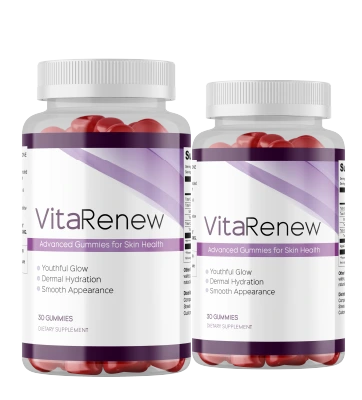
A daily gummy built around the cofactors skin structure depends on — vitamin C, copper, and zinc. Made in an FDA-registered, GMP-certified facility. The 2-bottle kit is a practical starting point.
For the photograph where you don’t think about your angle first.
60-day money-back guarantee · One-time purchase, no subscriptionWhat to expect from a cofactor approach and realistic timelines
Dermal remodeling operates on a timescale of months, not weeks. The extracellular matrix is a slow-turnover structure by design. Intervention studies involving collagen peptides, vitamin C, or combined nutritional approaches typically measure outcomes at eight to twelve weeks precisely because changes in dermal density and surface texture are not reliably measurable at shorter intervals.
The cheeks are also slower to respond than areas with higher blood circulation and more frequent cellular turnover. A reasonable expectation for a cofactor-focused approach:
- Weeks 1–4: no visible change; normal and expected.
- Weeks 5–8: possible tactile change — the skin may feel slightly different in texture or resistance before any visual change is apparent.
- Weeks 8–12: the window where most people who respond begin to notice something measurable in photographs or consistent-lighting mirrors.
- Beyond 12 weeks: the period of more sustained, assessable change for those who continue.
The 2-bottle kit provides a 60-day evaluation window with the manufacturer's money-back guarantee in place — enough time to observe whether the approach is working before committing to a longer supply. It is also the lowest price point, which makes it the rational starting position before investing in a larger kit.
"I came to this looking for something evidence-based. Three months in, I can see the difference in my morning mirror. The apples of my cheeks look less papery. My smile looks different — less crinkled at the edges. I photographed myself weekly and the progression is there."
"The science made sense to me immediately — I'd always suspected it wasn't a surface problem. Four months in I don't have perfect skin, but foundation sits completely differently on my cheeks. I can see the change in comparison photos."
These statements reflect individual experiences. Results are not typical and will vary from person to person.
Summary
Crepey skin on the cheeks is the product of converging factors: lifetime UV exposure that has degraded the dermal collagen matrix in the zygomatic region; age- and hormone-related decline in fibroblast productivity; loss of subdermal structural support; and, in many cases, insufficient availability of the cofactors the collagen assembly process depends on. Topical approaches improve surface appearance but cannot address the dermal layer where the structural change originates.
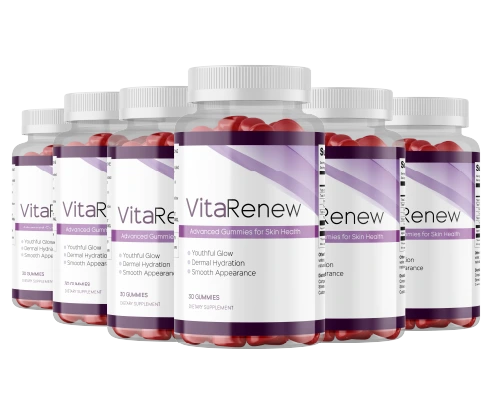
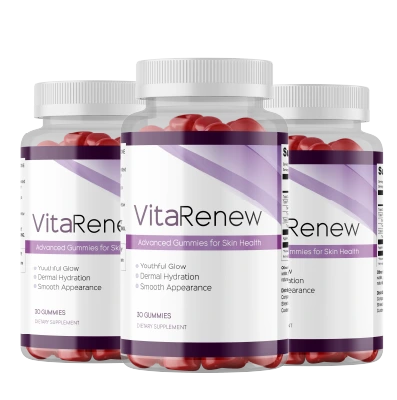
Supporting the collagen assembly process nutritionally — specifically through the cofactors that the enzymatic machinery requires — represents a mechanistically coherent approach. VitaRenew is built around exactly this: vitamin C, copper, and zinc in a daily gummy format, at levels targeted to skin structure support. The 2-bottle kit is where most people begin.
Product referenced above
VitaRenew
Vitamin C, copper, and zinc in a daily gummy. Supports skin, hair, and nails. Manufactured in the USA.
Because the structure that matters isn’t the one you can touch.
60-day money-back guarantee · Supports skin, hair and nails