Skin Health · Science Explained
What Causes Crepey Skin on Your Shoulders After 40?
Of all the places structural skin changes become visible, the shoulder surface often signals them early — because it carries two decades of UV history and age-related dermal loss in the same tissue, simultaneously.

You're getting dressed for an event — something with a wide neckline, thin straps, a sundress — and in the oblique light of the mirror you notice something you hadn't been watching. Not your face, which you've studied carefully for years. Your shoulders. The texture there has changed: a faint papery quality across the cap, near the upper back, visible when you lift your arm. Quieter than what the face shows. Earlier, in many cases.
The forearm gets most of the attention in writing about crepey skin. The shoulder often starts changing first, and the reason involves two processes running in the same tissue that, when they meet, accelerate what either would produce alone.
Why the shoulder is a distinctive aging zone
The shoulder surface occupies an unusual position in the skin's UV exposure history. The face is monitored, moisturized, and treated. The neck and décolletage receive some of that attention. The shoulders — for most women over most of their lives — have been last, or not reached at all. Thirty years of incidental sun exposure, without the protection that the face typically receives, accumulates in that tissue.
The effects of ultraviolet exposure on the dermis are not primarily about tanning or surface appearance. UV radiation triggers the production of reactive oxygen species, which activate a class of enzymes called matrix metalloproteinases (MMPs). These enzymes break down existing collagen and elastin fibers — the structural proteins that give skin its thickness, resistance, and snap-back quality. On a sun-exposed surface like the shoulder, this degradation has been operating for decades. It is site-specific and cumulative.
At the same time, the shoulder skin is thinner than it might appear. It moves frequently — reaching, lifting, rotating — in ways that expose changes in the dermis that thicker or more static areas can conceal longer. What shows there in light angles and in photographs is not a cosmetic problem. It's structural information.
The compounding effect: photoaging meets hormonal loss
Alongside the UV history, the shoulder surface is also subject to the systemic process that affects all skin after 40: the accelerated decline in dermal collagen density that accompanies the perimenopausal transition.
Collagen production declines from the mid-twenties at an estimated rate of roughly one percent per year — a gradual background slope that crosses no visible threshold for most of the thirties. What changes in the forties is the arrival of a second, faster decline. Estrogen plays a direct role in maintaining dermal collagen density throughout the reproductive years: it upregulates the activity of fibroblast cells responsible for synthesis and inhibits the enzymes that accelerate breakdown. As estrogen levels fall through the perimenopausal transition, both of those protective effects weaken.
Research published in Dermato-Endocrinology in 2013 documented that skin collagen content and thickness decrease significantly in the years surrounding menopause — changes that exceed the gradual age-related baseline. On the shoulder, this systemic decline stacks directly on top of the site-specific UV-driven degradation that has been running for years in that tissue. The result is a zone where structural changes can become visible earlier than in sun-protected skin.
The shoulder carries two compounding processes at once: the UV-driven breakdown that's been accumulating for decades, and the hormonal-driven systemic decline that accelerates in the 40s. Neither is cosmetic. Both operate in the dermis.
What the dermis actually needs to run its maintenance
The conversation about crepey skin typically focuses on what's being lost. The less-discussed side of that equation is that the body does not stop making collagen in the 40s and 50s. Fibroblast cells in the dermis remain active. The synthesis process continues to run. What the research identifies is a balance problem: the rate of breakdown is outpacing the rate of synthesis, and part of that is because certain steps in the assembly process are running below capacity.
Three specific cofactors are rate-limiting in collagen assembly:
- Vitamin C is required by two enzymes — prolyl hydroxylase and lysyl hydroxylase — that stabilize newly synthesized collagen chains into their functional triple-helix structure. Without adequate vitamin C, newly made collagen is structurally weak and degrades rapidly before it can integrate into the matrix. This biochemistry is well-established: it's the documented mechanism behind scurvy's destruction of connective tissue, and it remains relevant at the lower vitamin C levels common in adult diets.
- Copper activates lysyl oxidase, the enzyme responsible for cross-linking individual collagen and elastin fibers into the dense, load-bearing network that gives the dermis its mechanical properties. Individual fibers can be present without that network being assembled — copper is what completes the assembly step. It is consistently underrepresented in skin supplement formulations, despite being the rate-limiting cofactor for this structural cross-linking.
- Zinc supports fibroblast function and modulates matrix metalloproteinases — the same enzymes that UV exposure activates to break down structural proteins. Adequate zinc supports the balance between synthesis and degradation at the tissue level.
In well-nourished adults, amino acid availability is rarely the bottleneck for collagen production. The limiting factors tend to be these enzymatic steps, which depend on micronutrient availability regardless of how much protein is in the diet.
Referenced in this article
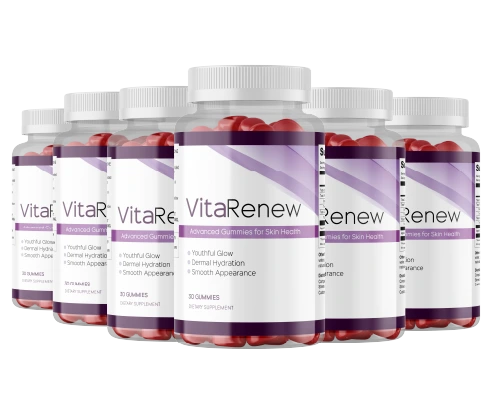
VitaRenew
Vitamin C, zinc and copper — the cofactors the dermis depends on for structural maintenance — in a once-daily gummy formulated for women 40+.
Supporting what the tissue actually needs, not just the surface above it.
60-day money-back guarantee · One-time purchase, no subscriptionWhat to look for when evaluating a supplement
If you've tried collagen peptide supplements without results you could point to on the shoulders or upper arms, the most common explanation is that the product addressed amino acid supply — which is not typically the bottleneck — rather than the enzymatic cofactors that actually limit the assembly process.
A practical evaluation checklist
- Vitamin C at a meaningful dose — not a trace amount added for the label, but enough to support enzymatic activity in collagen synthesis.
- Both copper and zinc, together. They operate at different steps in the process. Copper is the piece most consistently missing — without it, the structural cross-linking step is compromised regardless of what else is present.
- A 60-day guarantee, minimum. Dermal remodeling operates on a timescale of months, not weeks. A 30-day return window suggests the manufacturer doesn't expect meaningful results inside an honest evaluation window.
- Verified manufacturing. FDA-registered facility and GMP certification set the baseline. Third-party testing provides additional confidence in label accuracy.
- Measured claims. Any product promising visible results in under two weeks is communicating something about the seller, not the science. Realistic language about timelines is itself a quality signal.
How long a realistic evaluation takes
The outermost skin layer turns over every four to six weeks, so surface tone and texture can begin to shift within that timeframe. The dermis is considerably slower. Well-designed clinical studies of skin supplement interventions use eight- to twelve-week evaluation periods for good reason — that's the window in which dermal changes accumulate enough to become measurable.
Photograph the shoulder in consistent light at the start. Give any consistent protocol three full months before drawing a conclusion. Variables including sun history, sleep, diet quality, and genetics all influence the process in ways no supplement fully overrides — but supporting the enzymatic machinery that runs the maintenance process, consistently, is how effects accumulate over that window.
What people report after focusing on the cofactors
"I'd been taking a collagen powder for over a year and honestly couldn't point to a change. A friend who follows skin research suggested looking into cofactor support instead. By week ten I noticed the texture on my shoulders looked different in photos — less papery. My husband asked if I'd done something different. I had."
"The shoulders were the thing I noticed first — worse than my face, honestly. The skin was just thin and crumpled-looking when I lifted my arm. I focused on getting the cofactors consistently for about three months. It hasn't reversed anything, but the texture is noticeably better than it was and I don't avoid bare-shouldered clothes the way I used to."
These are individual accounts. Results are not typical and vary based on individual factors including age, sun history, diet, and consistency of use. No supplement is intended to diagnose, treat, cure, or prevent any disease.
Product referenced above
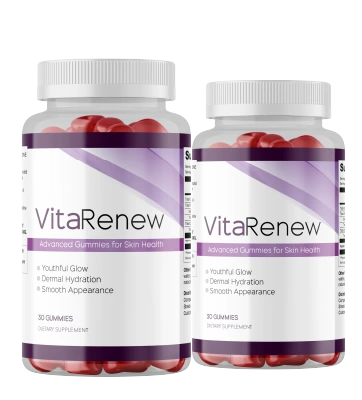
VitaRenew
Vitamin C, zinc and copper in one daily gummy. Formulated for women 40+. Made in an FDA-registered, GMP-certified facility. 60-day money-back guarantee. One-time purchase — no subscription.
For the skin that the face gets credit for, and the shoulders don't.
60-day money-back guarantee · Supports skin, hair and nailsBackground reading
- Thornton MJ. "Estrogens and aging skin." Dermato-Endocrinology, 2013.
- Pullar JM, Carr AC, Vissers MCM. "The Roles of Vitamin C in Skin Health." Nutrients, 2017.
- Rucker RB et al. "Copper, lysyl oxidase, and extracellular matrix protein cross-linking." American Journal of Clinical Nutrition, 1998.
- Fisher GJ et al. "Pathophysiology of premature skin aging induced by ultraviolet light." New England Journal of Medicine, 1997.
- Ogawa Y et al. "Zinc and skin disorders." Nutrients, 2018.
- Chung JH et al. "Molecular mechanisms of intrinsic skin aging." International Journal of Dermatology, 2003.