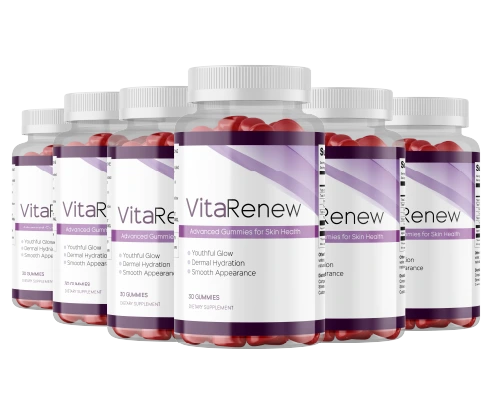
Skin & Body · Advertisement
Crepey Skin on Your Stomach After Weight Loss — What the Scale Didn't Warn You About
The number went down. The clothes fit differently. Then you looked at your stomach, and the skin that should have tightened was papery, thin, and loose. Here is the biology behind why that happens — and what it means for anything you try to do about it.

You did the work. You changed how you ate, you moved more, and over weeks or months the scale finally responded. That is not a small thing — most people who set out to lose meaningful weight don't reach the goal. You did.
And then you noticed your stomach in the mirror. Not the flatter contour you had imagined. Something else: skin that looks papery and thin, with fine creases that move when you breathe, a texture that doesn't quite match the effort. It's called crepey skin — named for its tissue-paper quality — and it appears on the abdomen for a significant number of women who lose weight after 40.
It is not a sign you did anything wrong. It's a sign that two biological processes collided at a moment you couldn't have anticipated.
Crepey belly skin after weight loss is not a cosmetic problem you can solve at the surface. It starts in a structural layer that most skincare products were never designed to reach.
What fat was actually doing beneath the skin
Most people think of body fat in terms of weight — a number on a scale, a size on a label. But subcutaneous fat — the fat directly under the skin — does something structural that rarely gets explained until after it's gone.
It provides volume. It fills the space between the deep tissue and the skin above it, holding the skin out from below the way a cushion holds fabric from collapsing inward. When that volume is present, the skin rests on it — smooth, taut, appearing full.
Lose the fat and the support disappears. The skin above it no longer has anything holding it out. In a young person with a dense, elastic dermis, the skin contracts to follow the new contour. It adjusts. After 40, that adjustment is significantly harder — and to understand why, you have to understand what was already happening in the dermis before the diet started.
Two declines that met at the same moment
The dermis is the structural middle layer of the skin — not the outermost barrier, but the deeper architecture where collagen and elastin live. Collagen provides thickness and resistance; elastin gives skin its ability to spring back after being stretched.
Collagen production declines gradually from the mid-twenties onward — slowly enough that no one notices for a long time. By the forties, a meaningful fraction of that original density is already gone, and the remaining fibers are less efficiently cross-linked, reducing the skin's recoil.
Then the second decline arrives. Estrogen actively supports collagen synthesis and dermal thickness. As it falls through the perimenopausal years, dermal collagen loss accelerates. Research on skin changes around menopause has found that a significant portion of skin collagen can be lost in the years immediately surrounding it — faster than the slow background rate of earlier decades.
So when weight loss removes the fat scaffolding, it removes it from a dermis that has already thinned. The skin that used to rest on volume below and spring back above can no longer do either. It settles — and what you see is the crepey, papery stomach skin that no one put in the brochure.
Why topical products have a real ceiling here
Firming lotions. Tightening oils. Collagen creams. These are the obvious things to reach for, and they are not entirely worthless — but they have a fundamental limitation that their packaging rarely mentions.
The skin's outermost layer — the stratum corneum — is a barrier. That is its job. It keeps the world out and moisture in. Most substances applied to the surface don't penetrate to the dermis in any meaningful amount, because the barrier is doing exactly what it evolved to do.
The dermis — where the structural changes are actually happening — sits well below that barrier. A cream cannot reach it. Anything claiming to "rebuild collagen" from the outside is claiming to solve a problem in a layer it cannot access.
Some topicals improve how the surface looks temporarily. They plump the stratum corneum with moisture, which reduces the appearance of texture in good light. That's real, and it matters. But it's not structural, and it doesn't last past the next wash.
What the collagen assembly line actually runs on
Your body has not forgotten how to make collagen. The fibroblast cells responsible for it are still present in your dermis. Collagen synthesis is a chemical process — an assembly line — and it hasn't stopped. It's running more slowly, with an older infrastructure, and with the tools it needs delivered less reliably.
Two cofactors deserve particular attention because they explain why supplementing the raw material alone often doesn't move the needle:
- Vitamin C. The enzymes that stabilize collagen's triple-helix molecular structure — prolyl hydroxylase and lysyl hydroxylase — are strictly dependent on vitamin C as a cofactor. Without adequate vitamin C, collagen is produced in a weak, unstable form. This is not a supplement trend; it's established biochemistry, the same mechanism that explains why scurvy destroys connective tissue. Without vitamin C, the structure doesn't hold.
- Copper. Newly formed collagen and elastin fibers exist initially as loose threads. An enzyme called lysyl oxidase cross-links them into the dense, resilient network that gives skin its resistance and recoil. Lysyl oxidase is copper-dependent. Without copper, the fibers form but never bind — the framework goes up, but nothing is fastened.
Zinc plays a supporting role in normal skin integrity and in the low-level repair that runs continuously in the dermis. Less headline-worthy, but part of the same system.
Most people get adequate amounts of these from food most of the time. The difficulty is that the dermis sits at the back of the nutrient queue — it gets what's left after higher-priority tissues have been served. When you're asking the dermis to remodel actively, targeted support may change what's available at the end of the line.
Referenced in this article
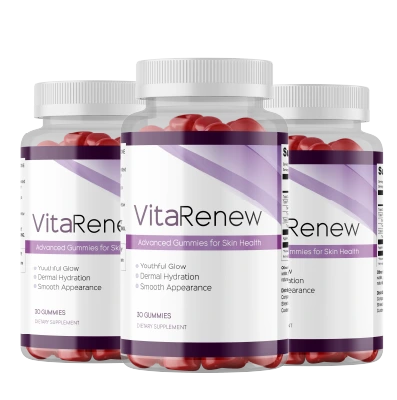
VitaRenew
Vitamin C, zinc, and copper in a daily gummy — the cofactors the skin's repair process actually runs on. Made in an FDA-registered, GMP-certified facility.
For the photograph where you finally recognize the skin you're standing in.
60-day money-back guarantee · One-time purchase, no subscriptionWhat women who've tried it report
"I lost about twenty-five pounds over six months and ended up with exactly what this article describes — papery skin right below my belly button that wouldn't budge. I started VitaRenew after reading this. Eight weeks in, I can't call it dramatic, but the texture feels different. Softer. Less crinkled when I move."
"Three months and I'm glad I kept the receipt long enough to see it through. It wasn't fast. But something changed — I stopped thinking about my stomach every time I got dressed."
These statements reflect individual experiences. Results are not typical and will vary based on individual factors including genetics, diet, sun exposure history, and consistency of use.
What to realistically expect — and when
The outermost skin layer turns over approximately every four to six weeks. Surface texture may be among the first things to shift. The dermis is slower — collagen remodeling is a matter of months, which is why most controlled studies of skin-support supplements measure outcomes at eight to twelve weeks.
Give whatever you try at least three months before drawing conclusions. Take a photograph in consistent light on day one — not in a mirror on a random morning, where mood and lighting do most of the deciding. Look at photographs.
Individual results vary. Sun damage history, how long the collagen decline has been underway, diet, sleep — all of these matter. A cofactor supplement supports the machinery; whether the output matches your expectations depends on factors no supplement controls.
Worth saying plainly: crepey skin from weight loss and aging is gradual and diffuse. If skin in a specific area changes quickly, thickens, changes color, or a spot grows or changes shape — that is a question for a dermatologist. Anything that doesn't fit the gradual pattern should be looked at by someone qualified to assess it.
Product mentioned above
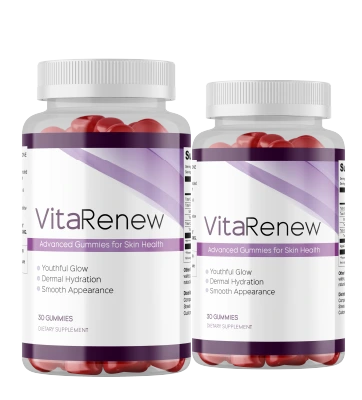
VitaRenew
Supports skin, hair, and nails. The 2-bottle option is a reasonable place to start.
For the skin that did the work alongside you.
60-day money-back guarantee · Supports skin, hair & nailsBackground reading
- Pullar JM, Carr AC, Vissers MCM. "The Roles of Vitamin C in Skin Health." Nutrients, 2017.
- Rucker RB et al. "Copper, lysyl oxidase, and extracellular matrix protein cross-linking." American Journal of Clinical Nutrition, 1998.
- Thornton MJ. "Estrogens and aging skin." Dermato-Endocrinology, 2013.
- Farage MA et al. "Characteristics of the Aging Skin." Advances in Wound Care, 2013.
- Ogawa Y et al. "Zinc and skin disorders." Nutrients, 2018.