Body Skin · Research Explainer
Why Crepey Skin Develops on the Thighs After 40
The inner thigh is rarely sun-damaged, which leads most women to expect it to age well. But the thigh dermis is highly sensitive to the hormonal changes of perimenopause and subject to years of mechanical stress from daily movement. That combination — not UV exposure — explains why crepey skin on the thighs often appears in the forties.

Among the questions women in their forties search for about skin, crepey skin on the thighs has a distinctive quality: the surprise in it. Crepey arms, crepey chest, crepey neck — these occur in areas with decades of sun exposure, and the connection to photoaging is intuitive even if not fully understood. But the thighs, particularly the inner thighs, spend most of the year covered. Why would they show this kind of structural change?
The answer is that photoaging and intrinsic aging are two separate processes, and the inner thigh is actually quite vulnerable to the second — the age-related structural change that happens regardless of sun exposure, driven by hormonal shifts and mechanical factors that have been accumulating for decades.
Understanding which process is at work changes where you look for meaningful support.
The two types of skin aging — and which one affects the thighs
Photoaging is the cumulative effect of UV radiation on the skin. UV light generates reactive oxygen species that fragment collagen and elastin fibres, damages DNA in skin cells, and stimulates the production of enzymes that degrade the dermal matrix. In heavily sun-exposed areas — the face, forearms, décolletage — photoaging can contribute substantially to the visual appearance of aged skin: leathery texture, uneven pigmentation, deep wrinkles.
Intrinsic aging is something different. It is the baseline biological process of structural decline that affects skin in every region of the body, regardless of sun history. Collagen synthesis declines from the mid-twenties at approximately one percent per year. Elastin becomes less well-organised over time. Hyaluronic acid density in the dermis decreases. The result is skin that is gradually less structurally supported — thinner, less resilient, less able to recover from deformation.
The inner thighs show little photoaging. What they show is intrinsic aging — and in that category, they are not protected at all. They face exactly the same collagen and elastin decline as any other part of the body. But they also face specific structural factors that make the crepey texture of intrinsic aging particularly visible there.
What makes thigh skin specifically susceptible
Several anatomical and physiological characteristics converge in the thigh region to make it a site where intrinsic aging becomes visible in the form of crepey texture.
The dermis of the inner thigh is highly estrogen-responsive. Estrogen receptors are distributed throughout the dermis, and estrogen actively supports fibroblast function — the cells responsible for synthesising collagen and elastin. It also helps regulate hyaluronic acid production and contributes to maintaining dermal thickness. Different regions of the body are not equally estrogen-sensitive. The inner thighs, along with the hips and inner upper arms, are among the most estrogen-responsive areas of the body's skin. This means that when estrogen begins declining during perimenopause — typically starting in the early-to-mid forties — these areas experience a more pronounced effect than less sensitive regions. The structural maintenance that estrogen was providing is withdrawn, and the tissue shows the difference.
The thigh skin experiences sustained mechanical stress from movement. Every step, every time you sit or stand, every flight of stairs subjects the skin over the thigh to compression and stretching. This mechanical cycling is particularly significant for the inner and frontal thigh surfaces. Over decades, the repetitive deformation and recovery cycle accumulates as fatigue in the collagen and elastin network. Fibres that are repeatedly stressed without adequate repair capacity begin to lose their organised cross-linked structure. The skin that used to spring back from deformation starts to hold the impression instead — the defining characteristic of crepey texture.
Sebaceous gland density is lower on the thigh than on the face or upper body. Sebaceous glands produce the oily secretion that lubricates the skin surface and maintains the moisture barrier. Areas with lower gland density are chronically drier. Dry skin surface amplifies the visual appearance of fine surface texture — what would barely show on a well-lubricated surface becomes clearly visible when the surface is drier and less pliable.
High estrogen sensitivity, decades of mechanical loading, and lower sebaceous density. These three factors do not cause skin aging — intrinsic aging happens in all skin. But they shape where and how the texture of that aging becomes visible. The inner thigh is not showing accelerated decline; it is showing exactly what the biology predicts for tissue with these characteristics.
What is happening at the structural level
The dermis is built around an organised mesh of collagen fibres — which provide tensile strength and physical volume — and elastin fibres — which allow the mesh to recoil after deformation. Embedded in this mesh is a hydrating matrix of hyaluronic acid and proteoglycans that maintains the physical plumpness of the tissue.
This scaffold is maintained by fibroblasts: cells that continuously produce, organise, and turn over the protein components of the dermis. Fibroblast activity is supported by estrogen, and the efficiency of the enzymatic processes fibroblasts depend on is governed by specific cofactors. When estrogen declines, fibroblast activity slows. And when the relevant cofactors are inadequate in the body, the enzymatic steps of collagen synthesis — even when fibroblasts are active — do not complete efficiently.
The collagen triple helix, for example, requires enzymatic hydroxylation of proline and lysine residues to achieve structural stability. Those enzymatic steps require vitamin C as a cofactor. Without adequate vitamin C, the triple helix is structurally incomplete. The individual strands then need to be cross-linked by lysyl oxidase — another enzyme — to form the load-bearing network. That cross-linking step requires copper as an obligate cofactor. Without copper, individual fibres are produced but the final bonding step that creates scaffold does not complete.
These are not supplement-industry claims. Vitamin C's role in collagen hydroxylation has been in the clinical nutrition literature for over a century — it is the mechanism of the skin deterioration in scurvy. Copper's role in lysyl oxidase has been established in biochemistry for decades. They appear consistently in the peer-reviewed dermatological science alongside zinc, which regulates the matrix metalloproteinases governing collagen turnover, and vitamin E and selenium, which together address the oxidative degradation of existing fibres.
Why topical products have a structural ceiling
The body lotion and firming cream market for the thighs is substantial. Formulas marketed for body skin firmness typically feature applied collagen, elastin, caffeine, hyaluronic acid, retinoids, or some combination. Surface hydration from these products is a genuine effect: better-hydrated surface skin reflects light more evenly and is more pliable, which reduces the visual prominence of fine texture. That is a meaningful benefit, and a good body moisturiser is worth using for this reason.
The structural ceiling is penetration depth. The stratum corneum — the outer protective layer of the skin — limits what can cross it based on molecular size. Molecules above approximately 500 daltons do not penetrate it in meaningful amounts. Collagen sits vastly above that threshold; applied collagen remains at the surface. Topical elastin does the same. Even retinoids, the topical ingredient with the most robust evidence for sub-surface effects, work at or near the dermal-epidermal junction — not deep in the dermis where the collagen scaffold lives.
The crepey texture visible on the thighs is a scaffold problem. The scaffold is beneath the surface. An approach that reaches only the surface addresses the symptom of dryness, not the structural origin of the texture.
Referenced in this article
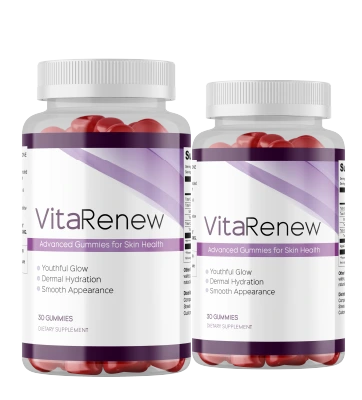
VitaRenew
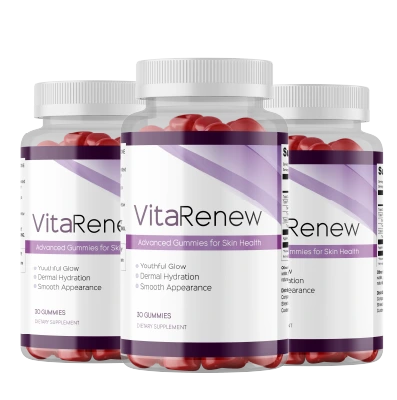
Vitamin C, copper, zinc, vitamin E, selenium and beta-carotene — the cofactor combination the body's collagen synthesis process depends on, in one daily gummy.
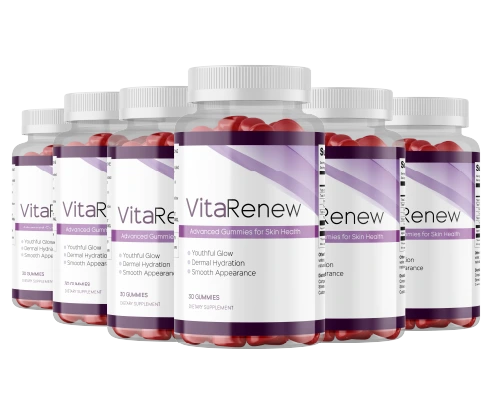
Most readers start with the 2-bottle supply — 60 days is the minimum window for a fair assessment of any internal skin support.
60-day money-back guarantee · One-time purchase, no subscriptionWhat internal support for the scaffold depends on
The body maintains the capacity to synthesise collagen throughout adult life. Fibroblasts do not stop producing collagen at 40. What changes is the efficiency of the process — and that efficiency depends on cofactors that are distinct from dietary protein.
A partial protein-only approach — simply eating more collagen-rich foods — provides the amino acid building blocks but does not supply the cofactors the enzymatic steps require. The synthesis process is multi-stage, and each stage has specific molecular requirements:
- Vitamin C is required by prolyl hydroxylase and lysyl hydroxylase to stabilise the procollagen triple helix. Without adequate vitamin C, collagen is synthesised but structurally compromised at this early stage. Vitamin C is also a direct antioxidant that helps protect the dermis from oxidative degradation, a second mechanism running in parallel with synthesis decline.
- Copper is the obligate cofactor for lysyl oxidase — the enzyme that cross-links collagen and elastin fibres into a functional load-bearing network. Without copper, individual fibres are produced but remain as loose strands rather than organised scaffold. This step is where the dermis becomes structural tissue. Copper is consistently underrepresented or absent in commercial skin supplements despite its centrality in the published biochemistry.
- Zinc regulates the matrix metalloproteinases that govern collagen turnover, and participates in wound-repair signalling. It is present consistently in the dermal biology literature as a supportive cofactor throughout the synthesis and maintenance cycle.
A second parallel process governs oxidative degradation of existing fibres. Reactive oxygen species accelerate fragmentation of collagen and elastin in the metabolically active dermis. Vitamin E and selenium — the antioxidant pair most consistently cited together in the dermal oxidative-stress research — address this mechanism. Their role is protective rather than synthetic: supporting the longevity of existing fibres while the synthesis pathway works to maintain the pool.
What to look for in an internal supplement
Against this research, a working checklist
- Vitamin C at a meaningful dose. Not a trace amount. The prolyl and lysyl hydroxylase enzymes require consistent adequate supply to function at the rates needed for dermal maintenance.
- Copper alongside zinc. They act at separate enzymatic stages. Zinc without copper addresses turnover regulation while missing the cross-linking step — where scaffold structure actually forms. Many formulas omit copper entirely. This is a meaningful gap.
- Both vitamin E and selenium, together. The antioxidant pair in the dermal literature. A single antioxidant addresses one aspect of oxidative degradation. The pair is more complete coverage for a second mechanism running alongside synthesis decline.
- Documented manufacturing standards. FDA-registered facility, cGMP certification. These are verifiable facts. A credible manufacturer can provide the documentation on request, not just claim it.
- A guarantee that reflects the biology. The dermis remodels slowly. A 60-day guarantee is the minimum that allows honest assessment. Guarantees shorter than that ask you to evaluate a supplement on a timeline that the dermal biology cannot support.
VitaRenew
Of the formulas reviewed against this checklist, VitaRenew maps most directly to the cofactor model the dermal synthesis literature describes. It supplies vitamin C, zinc, copper, vitamin E, selenium, and beta-carotene — addressing both the enzymatic requirements of collagen synthesis and the oxidative-protection requirements for existing fibres, in a single daily gummy rather than a multi-supplement stack.
It is manufactured in an FDA-registered, cGMP-certified facility, sold as a one-time purchase with no subscription, and backed by a 60-day money-back guarantee. The 2-bottle option provides the 60-day minimum window needed for a meaningful internal assessment.
VitaRenew is a supplement. It supports healthy skin, hair, and nails. It is not intended to diagnose, treat, or cure any condition, and these statements have not been evaluated by the FDA.
On realistic timelines
Dermal collagen remodelling is slow relative to surface changes. Surface texture and hydration can shift in four to six weeks. Structural changes in the deeper dermis are measured at eight to twelve weeks in clinical dermatology research. An honest assessment of an internal supplement requires a minimum of 60 days — and individual variation in starting point (hormonal status, genetics, UV history, current nutrition) means that two women with the same product for the same period can have meaningfully different experiences, both within the normal range of variation.
"I noticed the crepey texture on my inner thighs around 43 and spent two years looking for a topical answer. Nothing addressed the actual texture — just the surface dryness. After about ten weeks on VitaRenew I noticed a real difference in the quality of the skin when I press it — more resilience. The crinkled pattern is less pronounced and the change has held over several months."
— Lorraine H., 46, verified purchaser
"The thigh skin was my specific concern — it surprised me because I expected less change there given the sun coverage. Once I understood the estrogen connection it made more sense. I've been on VitaRenew for four months and the texture on my inner thighs is noticeably smoother. Not a transformation — a consistent, real improvement that started around week eight."
— Patricia W., 50, verified purchaser
Individual results vary. These testimonials represent personal experiences and may not reflect typical outcomes.
A note on asymmetric or rapid changes: the structural changes described in this article are gradual and bilateral — occurring on both sides in the same pattern over time. If you notice changes that are asymmetric, rapid, or accompanied by swelling, tenderness, or colour changes in the skin, those warrant evaluation by a dermatologist before any supplement response. Changes outside the pattern of gradual bilateral structural shift should be assessed professionally first.
The short version
Crepey skin on the thighs after 40 is driven primarily by intrinsic aging — not by sun damage — and the inner thigh is specifically susceptible because of three converging factors: high estrogen sensitivity in the dermis (making it responsive to the hormonal decline of perimenopause), decades of mechanical stress from daily movement, and lower sebaceous density that amplifies the visual appearance of fine surface texture.
Topical products address the surface of the skin within their penetration limits. The collagen scaffold beneath the surface depends on enzymatic processes that require specific cofactors — most centrally vitamin C, copper, and zinc — to function at adequate rates. Those cofactors are distinct from dietary protein and commonly absent or underdosed in skin supplements. That is what the research supports as the rationale for an internal approach.
Product referenced above
VitaRenew
The cofactor-first formula for skin, hair and nails. FDA-registered, GMP-certified facility. No subscription. Ships from the US.
Start with the 2-bottle supply — 60 days gives the biology time to show a real response.
60-day money-back guarantee · No subscription · Ships from the USBackground Reading
- Pullar JM, Carr AC, Vissers MCM. "The Roles of Vitamin C in Skin Health." Nutrients, 2017.
- Rucker RB et al. "Copper, lysyl oxidase, and extracellular matrix protein cross-linking." American Journal of Clinical Nutrition, 1998.
- Thornton MJ. "Estrogens and aging skin." Dermato-Endocrinology, 2013.
- Varani J et al. "Decreased collagen production in chronologically aged skin." American Journal of Pathology, 2006.
- Uitto J. "The role of elastin and collagen in cutaneous aging." Journal of Drugs in Dermatology, 2008.
- Ogawa Y et al. "Zinc and skin disorders." Nutrients, 2018.
- Rizwan M et al. "Photoprotective effects of antioxidants." Journal of Investigative Dermatology, 2011.