Skin Health · Explainer
Why Your Belly Skin Gets That Crepey Texture After 40
It isn't weight change. It isn't neglect. And a richer body lotion was never going to fix it — because what's shifting is happening in a layer that no topical product reaches.

She notices it while getting dressed in the morning — not in the mirror, but with her fingertips. Running her hand across her midsection, the skin responds differently than it used to. Soft in a way that feels papery. Fine lines across the surface that weren't there a few years ago. A kind of looseness that has nothing to do with weight — her body is the same, but the skin itself has changed.
The word for it is crepey, and the belly is one of the places it tends to appear first, alongside the upper arms and the chest. For many women, it arrives quietly somewhere in their forties — noticed privately, in small moments like this one.
Two things are worth saying before we get into the biology.
The first: this is not a weight issue. Women who haven't gained a pound, who have never been pregnant, who eat carefully and walk every day — they get crepey skin on their stomach too. The change is not a measure of anything you did or didn't do.
The second: this is not a surface problem. That single distinction explains almost everything about why the products most women reach for — body butters, firming creams, oils — don't produce lasting results. They are working on the wrong layer.
Crepey belly skin is a structural change in the dermis, not dryness at the surface. That's why it requires a different conversation — and why understanding it is genuinely useful.
What is actually changing underneath the skin
Skin is made of layers. The outermost — the barrier you can see and touch — is largely a protective surface of dead cells and lipids, roughly as thick as kitchen wrap. Its job is to hold water in and keep the environment out.
Underneath sits the dermis, and that's where the structure of skin actually lives. It contains a dense mesh of collagen fibres that give skin its thickness and resistance, elastin fibres that let it spring back after being stretched, and hyaluronic acid that fills the spaces between them with water.
Crepey skin is what a thinning, loosening dermis looks like from the outside. The mesh has fewer fibres than it used to. The fibres that remain are less tightly cross-linked. Skin that once pulled taut now settles differently — rippling where it didn't before, creasing under the lightest pressure.
This is why applying a moisturizer produces a temporary improvement but not a lasting one: the cream reaches the surface, softens the top layer, makes the skin reflect light a little more evenly. By the end of the day, the effect is gone. Nothing structural changed, because nothing structural was addressed.
Why the belly in particular — and why the forties
The abdomen carries a specific set of vulnerabilities. The skin there tends to be softer and thinner than skin over muscle-dense areas, and it's a zone that has often experienced stretching from various life events — not just pregnancy, but ordinary weight fluctuations, hormonal cycles, the normal changes that come with living in a body over decades.
The forties tend to feel like a turning point for two reasons that overlap in timing. Collagen production begins declining gradually from the mid-twenties onward — approximately one percent per year by some estimates, slow enough that the changes are imperceptible for a long time. Then, as women approach perimenopause, estrogen levels begin to fall. Estrogen supports both collagen density and the production of hyaluronic acid, and as it declines, dermal thinning accelerates. Research has found that a significant proportion of skin collagen can be lost in the years surrounding menopause.
The two curves meet. The slow slope and the steeper drop arrive at the same time — and the result is the feeling that something changed almost overnight. It didn't, but it is easy to understand why it seems that way.
The step most explanations skip
Here is what tends to be missing from most discussions of crepey skin, and it is the most practically useful part of the biology.
Your body has not stopped knowing how to make collagen. The genetic instructions are intact. The fibroblast cells in the dermis that produce it are still present. Collagen synthesis is an assembly process, and like any process, it needs more than raw material — it needs the enzymatic machinery that runs the line.
Two of those enzymes are worth knowing:
- Prolyl hydroxylase and lysyl hydroxylase give the collagen molecule its stable triple-helix shape. Both are strictly dependent on vitamin C as a cofactor. Without adequate vitamin C, the collagen produced is structurally weak — it's why scurvy destroys connective tissue, and it has been established biochemistry for decades, not a supplement claim.
- Lysyl oxidase cross-links the individual collagen and elastin fibres into the strong, springy mesh that gives skin its resistance and recoil. This enzyme requires copper. Without copper, the fibres are produced but never properly bound together.
Zinc belongs in the same conversation, supporting normal skin cell renewal and the ongoing repair processes in the dermis.
The practical implication: if the limiting factor is the enzymatic machinery — not the raw material — then adding more building material doesn't change the output. The bottleneck is the tools, not the supply of bricks.
What this means for collagen supplements
If you have taken collagen powder for a year and seen little, this is the most likely reason — and it is more interesting than "collagen doesn't work."
To be fair to the research: several controlled trials of oral collagen peptides have reported modest improvements in skin elasticity and hydration, and the mechanism is still being studied. It is not nothing. But amino acid supply is rarely the limiting factor in a reasonably fed adult. If the bottleneck is enzymatic — vitamin C for structural stability, copper for cross-linking — then increasing the raw material supply to a line that already has more than it can process won't improve output much.
That's not a reason to feel misled. It's a reason to look at what might have been missing alongside it.
What to look for if you decide to try something
The checklist is shorter than most marketing would suggest:
- Vitamin C in a meaningful amount — not a trace for the label. The enzymatic requirement is real.
- Copper, specifically. It is frequently left out of skin formulations despite being the cofactor for cross-linking. Without it, the fibres don't bind properly.
- Zinc for the ongoing repair cycle.
- Antioxidant support (vitamin E and selenium) — oxidative stress degrades existing fibres while new ones are trying to form.
- A realistic timeline. Dermal remodelling is measured in months, not weeks. Any product promising visible results in seven days is describing the seller, not the biology.
- A guarantee long enough to actually evaluate it — sixty days at minimum, given the timescale of change.
Referenced in this article
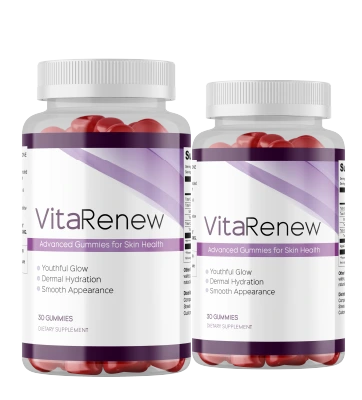
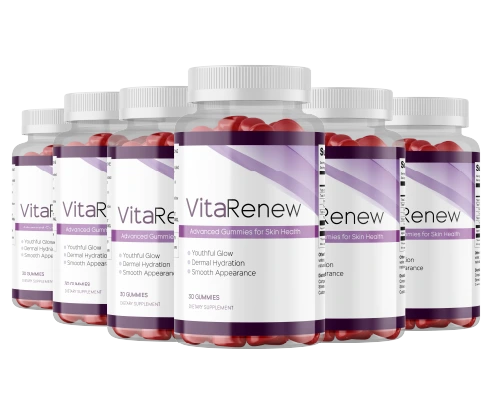
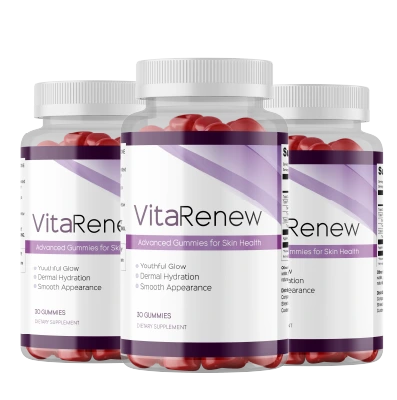
VitaRenew
The cofactors your skin's collagen process actually runs on — vitamin C, zinc and copper, in one daily gummy. Made in an FDA-registered, GMP-certified facility.
For the mornings you want to feel at home in your own skin again.
60-day money-back guarantee · One-time purchase, no subscriptionWhat women say
"I've been applying firming lotion twice a day for two years. The skin on my stomach still had that crepey texture every morning. I started paying attention to what I was missing on the inside instead of adding more on the outside — and it was a different experience entirely. My skin still isn't twenty-five, but it feels more like itself."
"I kept thinking the texture on my midsection was from the weight I'd gained and then lost. Then I read about collagen cofactors and I realized it had nothing to do with weight — it was the same change happening to my arms and my chest too. Understanding the mechanism helped me focus on the right thing."
These statements reflect individual experiences. Results are not typical and will vary based on age, genetics, diet, lifestyle, and other factors.
A note on realistic expectations
The outer layer of skin turns over every four to six weeks — so surface texture and feel are typically the first things that may shift. The dermis moves more slowly. Most controlled studies of skin-directed nutrients measure outcomes at eight to twelve weeks for exactly that reason. A photograph in consistent lighting on day one gives you something honest to compare against.
Anything sudden or asymmetrical — a patch of skin that changes in color, texture, or shape in a way that doesn't match gradual aging — is a question for a dermatologist, not a supplement. Crepey skin from natural aging is slow and symmetrical.
Worth saying directly: no supplement supports skin, hair and nails in a way that works equally for everyone. Genetics, sun history, stress, and your overall diet all affect how the dermis responds. The mechanism is real; the results are individual.
The short version
Crepey skin on the belly is a structural change — fewer collagen fibres, less cross-linking, less of the internal cushioning that kept skin looking and feeling firm. It arrives in the forties because two separate processes (gradual collagen decline and estrogen-related acceleration) happen to overlap there. Creams address the surface and have a genuine but limited ceiling. The dermis rebuilds slowly, and the machinery that does the rebuilding depends on cofactors that are easy to miss.
That's a less dramatic story than most skin marketing tells. It also happens to be where the more useful questions are.
Product referenced above
VitaRenew
Vitamin C, zinc and copper — the cofactors your skin's collagen process depends on — in a single daily gummy. Supports skin, hair and nails.
For the photograph that feels honest.
60-day money-back guarantee · Supports skin, hair and nailsBackground reading
- Pullar JM, Carr AC, Vissers MCM. "The Roles of Vitamin C in Skin Health." Nutrients, 2017.
- Rucker RB et al. "Copper, lysyl oxidase, and extracellular matrix protein cross-linking." American Journal of Clinical Nutrition, 1998.
- Thornton MJ. "Estrogens and aging skin." Dermato-Endocrinology, 2013.
- Shuster S, Black MM, McVitie E. "The influence of age and sex on skin thickness, skin collagen and density." British Journal of Dermatology, 1975.
- Ogawa Y et al. "Zinc and skin disorders." Nutrients, 2018.