Skin Health · Science Explainer
Does Exercise Help Crepey Skin After 40? What the Research Actually Suggests
Exercise does remarkable things for the body after 40. Improving crepey skin texture isn't reliably one of them — and the reason why points directly to what the dermis actually needs.

The question surfaces constantly in women's health forums, fitness communities, and dermatology waiting rooms: I've been exercising consistently. Why does the skin on my arms and thighs still look crepey?
It's a fair question, because the intuition behind it is reasonable. Exercise builds muscle. More muscle under the skin means more structure supporting the surface. So why doesn't toning the arms improve the thin, papery texture that appears on them after forty?
The short answer is that exercise and crepey skin operate on separate biological systems. The longer answer explains something useful about what the dermis actually needs — and why the standard solutions most people reach for don't address it.
What exercise actually does for skin
Regular exercise does have measurable effects on skin. It improves circulation, which helps deliver oxygen and nutrients more efficiently to skin cells. It reduces chronic inflammation, which has downstream effects on many systems including dermal health. Some research suggests it may support mitochondrial function in skin cells, keeping them metabolically active for longer.
These are real effects. They matter for general skin health. But none of them directly address the structural mechanism that creates crepey texture — and understanding that distinction is the key to not spending years pursuing the wrong solution.
What crepey skin actually is
Crepey texture isn't a surface phenomenon. It originates in the dermis — the structural layer that lies beneath the epidermis you can see and touch. The dermis is primarily composed of three elements:
- Collagen fibres, which provide the dermis with its thickness, density, and structural integrity. Think of these as the framework that keeps skin from collapsing inward.
- Elastin fibres, which allow skin to stretch and return to its original position. They're what makes young skin snap back when you pinch it.
- Hyaluronic acid, which fills the spaces between the fibres and keeps the matrix hydrated, cushioned, and plump.
Crepey texture is the visible result of that matrix losing density over time. As collagen fibres thin and elastin cross-linking weakens, the surface above the dermis settles differently. It develops the characteristic fine wrinkling at rest, the excess give when the arm moves, and the papery appearance that doesn't respond to hydration because the problem is structural, not surface-level.
Exercise builds what is beneath the dermis. Crepey texture is a problem within the dermis. They don't share the same address.
The exercise paradox: why getting fit can make it more visible
There's an irony that many women report: getting in shape can temporarily make crepey skin more noticeable. When body fat decreases, the subcutaneous layer that was gently filling out loose skin from below reduces. The skin above it — whose structural density hasn't changed — is now less supported from underneath and may drape more visibly over the muscle beneath.
This is not permanent and it doesn't mean exercise made things worse in any lasting sense. But it explains why women who commit seriously to fitness and lose meaningful amounts of fat sometimes find the texture problem intensifies before it might otherwise improve. The muscle is doing its job. The issue is a layer above it.
What the dermis does respond to
The fibroblasts — the cells that produce collagen and elastin — don't simply stop working after forty. They continue their function throughout life. What changes is the quality and efficiency of what they produce, and that shift is closely tied to the availability of specific cofactors that the assembly process depends on.
Two are particularly well-documented in the biochemistry literature:
- Vitamin C. The collagen molecule's characteristic triple-helix structure requires hydroxylation of proline and lysine residues — a process performed by two enzymes, prolyl hydroxylase and lysyl hydroxylase, that are entirely vitamin C-dependent. When vitamin C availability is inadequate, the collagen produced is structurally less stable. This is foundational biochemistry established well before the supplement industry noticed it.
- Copper. Once collagen and elastin fibres have been produced, they need to be cross-linked into a resilient, organized network. The enzyme responsible — lysyl oxidase — requires copper to function. Without adequate copper for this step, the individual fibres are present but loosely organized, like threads that haven't been woven into fabric.
Zinc completes the picture: it's involved in normal keratinocyte turnover and the continuous dermal repair processes that maintain the matrix over time. A deficiency doesn't announce itself loudly, but the pace of renewal slows in ways the dermis eventually reflects.
The practical implication is significant. Many women who try collagen supplementation and find the results disappointing may be experiencing a cofactor bottleneck: the raw material is being added, but the assembly line is missing the tools to use it efficiently. Addressing the cofactors rather than the raw material is a different approach.
What this means for supplementation
A supplement designed to support this specific mechanism would focus on vitamin C, copper, and zinc — the three cofactors that matter most for collagen and elastin assembly and organization. Not collagen protein itself. The cofactors the body needs to do its own manufacturing work properly.
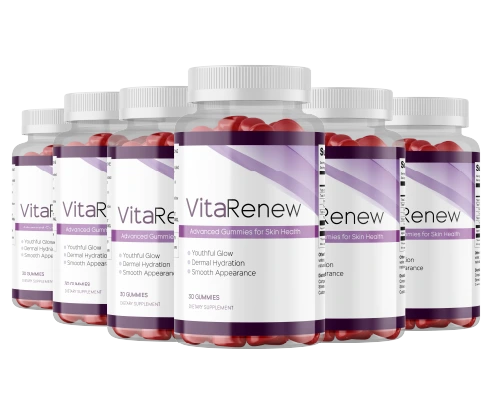
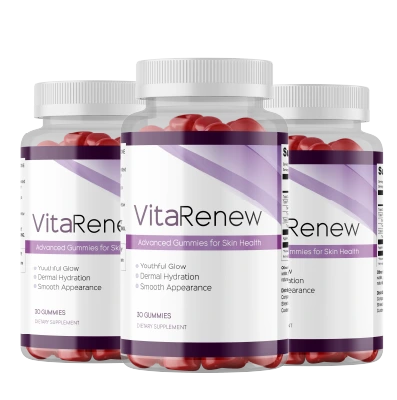
VitaRenew is built on exactly this model: a daily gummy providing vitamin C, copper, and zinc in a form designed to support the dermis's own production processes. The 2-bottle kit is the most practical starting point — a full 60-day supply with a money-back guarantee, which is the minimum period needed to give the dermis enough time to reflect any meaningful structural change.
Referenced in this article
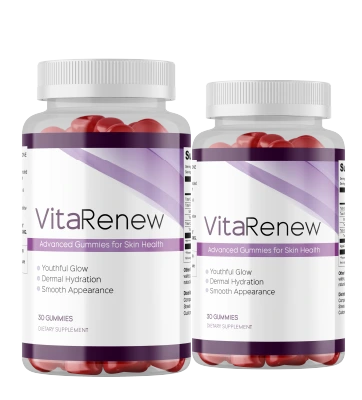
VitaRenew
A daily gummy built around vitamin C, copper, and zinc — the cofactors the skin's collagen assembly process depends on. Made in an FDA-registered, GMP-certified facility. The 2-bottle kit gives you 60 days to form a real opinion.
For skin that matches the effort you're already putting in everywhere else.
60-day money-back guarantee · One-time purchase, no subscriptionWhat women in their forties and fifties report
"I'd been going to the gym four days a week for over a year and my arms looked more toned than they ever had. The crepey skin was still there. Addressing the two things separately — exercise for fitness, this for the dermis — is what finally made a difference I could see."
"I wish someone had told me earlier that these were two different problems requiring two different approaches. I spent two years thinking I wasn't working hard enough at the gym when the gym was never the right tool for this part."
These statements reflect individual experiences. Results are not typical and will vary from person to person.
Timeline and realistic expectations
The dermis operates on a slower renewal cycle than the epidermis. Surface skin turns over every four to six weeks; meaningful structural changes in the dermis take longer to become visible on the surface. Studies on collagen interventions typically measure outcomes at eight to twelve weeks, which reflects the pace at which the deeper layer works.
Starting with the 2-bottle kit gives a 60-day evaluation window — enough time to observe whether the approach is producing any meaningful change before committing to a longer supply. Photographing under consistent lighting at the start is more reliable than relying on memory, since the eyes adapt to gradual change faster than a comparison photo does.
Exercise remains one of the most powerful things a person can do for overall health after forty. The crepey skin question just happens to live in a different part of the biology — one that responds to a different set of inputs.
Product referenced above
VitaRenew
Vitamin C, copper, and zinc in a daily gummy. Supports skin, hair, and nails. Manufactured in the USA. Two-bottle kit is the recommended starting point.
Because the dermis has its own set of needs — and they're straightforward.
60-day money-back guarantee · Supports skin, hair and nails