Skin Health · Nutrition Science
The Foods a Dermatologist Eats for Firmer Skin After 40
Crepey texture on the arms, chest, and hands is one of the most common skin complaints in women over 40 — and one of the least explained. The answer, increasingly, starts not with what you put on your skin but with what you give it from inside.

She had been diligent about her skincare routine for years. SPF every morning, retinol two nights a week, a good moisturizer. Her face, she felt, was holding its own. Then she looked down during a weekend away — arms stretched out in the sun on a terrace — and saw something the face creams couldn't explain: skin on the upper arms and across the chest that had the unmistakable texture of crepe paper. Fine, mesh-pattern lines. Skin that felt slightly loose when lightly pinched, slower to spring back than she remembered. Not dramatic, but there. And entirely different in character from the surface she monitored so carefully in the mirror each morning.
What she was noticing was structural change in the dermis — the deeper layer where collagen and elastin form the skin's supportive scaffolding. And what she learned, when she started looking into it, was that the skin's structural maintenance runs on a specific set of nutrients. Not general nutrition. Specific cofactors that serve as rate-limiting inputs in the processes that build and maintain the dermal matrix.
Why skin texture changes in the 40s — the mechanism that matters
Skin firmness depends on two structural proteins: collagen, which provides tensile strength and density, and elastin, which allows the tissue to snap back after distension. Both live in the dermis and both are manufactured there by fibroblast cells throughout adult life — including well into the 40s and 50s.
The change that happens in the 40s is not simply "the body stops making collagen." It is more specific than that: synthesis continues, but the rate of degradation accelerates. The enzymes that break down structural proteins — matrix metalloproteinases — become more active with age, while the enzymatic steps that assemble and cross-link new fibers slow down. The result is a net loss of structural density that begins to register visually as thinner, more loosely textured skin.
Here is where diet enters the picture. The slowing of the assembly side is not mainly caused by a shortage of amino acid building blocks — most adults consume more than enough protein for this purpose. It is caused by a shortage of the micronutrient cofactors that the assembly enzymes require to function. Three cofactors, specifically, govern whether new collagen and elastin are properly assembled and cross-linked into a functional load-bearing structure. Getting those cofactors into the diet consistently is what the research increasingly points to as the practical lever available through food.
The nutrients that support the dermis — and where to find them
Vitamin C — the structural stabilizer
Vitamin C is required by two enzymes — prolyl hydroxylase and lysyl hydroxylase — that stabilize newly synthesized collagen chains into their functional triple-helix structure. Without adequate vitamin C, the chains form but cannot hold their shape; they degrade before becoming useful matrix. This mechanism is the same one behind the tissue breakdown seen in scurvy, and it remains relevant at the lower circulating vitamin C levels common in adults who are not actively deficient but not consistently optimal.
Skin tissue is highly sensitive to vitamin C supply. Research published in the American Journal of Clinical Nutrition (2007) found that women with higher dietary vitamin C intakes had significantly better skin appearance and lower likelihood of developing wrinkled or dry-looking skin — independent of age. The mechanism: higher circulating levels support sustained enzymatic activity in dermal fibroblasts.
Copper — the cross-linking activator
Copper is the rate-limiting cofactor most consistently missing from skin supplement formulations — and from the diet of adults who are not specifically watching for it. It activates an enzyme called lysyl oxidase, which performs the cross-linking step: taking individual collagen and elastin fibers and connecting them into the load-bearing network that actually gives the dermis its structural integrity. Synthesis can be occurring normally, building blocks can be adequate — and yet without copper to activate lysyl oxidase, the resulting matrix is structurally weak and degrades quickly under mechanical stress.
Adults in the United States average well below the tolerable upper limit for copper, but many also fall below the estimated average requirement. The foods that supply it meaningfully are not common centerpieces of everyday diets.
Zinc — the synthesis-to-degradation balance
Zinc supports fibroblast function directly and plays a moderating role on the matrix metalloproteinases that break down structural proteins. Maintaining adequate zinc helps shift the balance between collagen synthesis and collagen breakdown in favor of net density — which is the direction the process needs to go to support skin structure after 40.
The practical insight is that the bottleneck in dermal maintenance after 40 is almost never the amino acid supply — it is the cofactor supply. Vitamin C enables assembly. Copper enables cross-linking. Zinc moderates the breakdown. A diet that consistently delivers all three is doing something meaningfully different from one that delivers only amino acids.
Supporting nutrients worth adding to the picture
Protein (amino acid supply)
While amino acids are not typically the rate-limiting factor, inadequate protein intake does constrain the substrate available for collagen synthesis — particularly the amino acids glycine, proline, and hydroxyproline, which are unusually concentrated in connective tissue proteins. The practical implication: a diet built around plant proteins alone may provide less of these specific amino acids per gram of total protein than one that includes animal sources.
Foods with the highest glycine and proline concentration relative to total protein: bone broth, slow-cooked collagen-rich cuts, egg whites, and skin-on fish.
Omega-3 fatty acids
Chronic low-grade inflammation accelerates the activity of matrix metalloproteinases — the enzymes that break down structural proteins. Omega-3 fatty acids (EPA and DHA) reduce the production of pro-inflammatory signaling molecules, which in turn helps moderate this degradation rate. They also support the skin's lipid barrier, reducing trans-epidermal water loss and helping the surface hold moisture — which significantly affects how structural changes appear visually.
Sources: fatty fish (salmon, mackerel, sardines, herring), walnuts, flaxseed, chia seeds.
Hydration
The dermis is approximately 70% water by weight. When systemic hydration is below optimal, the tissue loses volume and the fine-line texture of structural aging appears more pronounced than it would in a well-hydrated state. Plain water, water-rich vegetables (cucumber, celery, zucchini), and water-rich fruits (watermelon, cantaloupe) all contribute. The mechanism is not structural — hydration does not change collagen density — but visible texture is markedly affected by how full the dermis is on a given day.
Referenced in this article
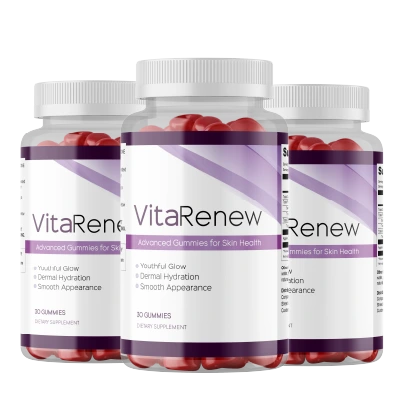
VitaRenew
Vitamin C, copper, and zinc — the three cofactors the dermis depends on for structural maintenance — in a once-daily gummy formulated for women 40+.
What the research points to, in one consistent daily dose.
60-day money-back guarantee · One-time purchase, no subscriptionThe gap that food alone struggles to close
A diet built intentionally around these principles can deliver meaningful increases in all three key cofactors. But there is a practical gap that arises in most adults' eating patterns, and it centers on copper.
Copper is present in small amounts in a range of foods — legumes, seeds, some vegetables — but in the quantities needed to reliably support lysyl oxidase activity in the dermis, the list of practical sources is short. Organ meats (particularly liver) and shellfish (particularly oysters) carry the most concentrated supply, but both are uncommon features of most American diets. Seeds and dark chocolate contribute, but at lower concentrations. Adults who eat what is considered a healthy, varied diet often fall short of the copper levels that would support consistent enzymatic activity at the cross-linking step.
Vitamin C is easier to obtain through food, but absorption and tissue saturation vary. Dermal vitamin C levels decline with age, and the skin's oxidative environment means demand is ongoing. Zinc faces similar considerations: bioavailability from plant sources is lower than from animal sources, and women following predominantly plant-based diets are a group where marginal zinc supply is well-documented.
This is where a targeted supplement enters as a rational complement to a food-first approach. Not to replace dietary effort, but to address the specific biochemical gaps that food alone is unlikely to close consistently, in the specific nutrients that are rate-limiting for dermal structural support.
What women report when they close the gap
"I was already eating pretty well — salmon a few times a week, lots of vegetables, good protein. But I looked at my diet carefully and realized I was getting almost no copper. My skin had been looking thin and papery on my arms and the front of my chest for about two years. Within three months of getting the cofactors consistently, the texture was noticeably denser. My arms look like my arms again."
"My dermatologist actually asked what I was doing differently. I told her I had changed my diet and added a daily gummy with vitamin C, zinc and copper. She said that made sense — that most skin supplements focus on amino acids and miss the cofactor piece entirely. The change in my upper arms and chest took about two and a half months to become visible, but it was real."
These are individual accounts. Results are not typical and will vary based on individual factors including age, baseline dermal structure, diet, and consistency of use. No supplement is intended to diagnose, treat, cure, or prevent any disease.
Product referenced above
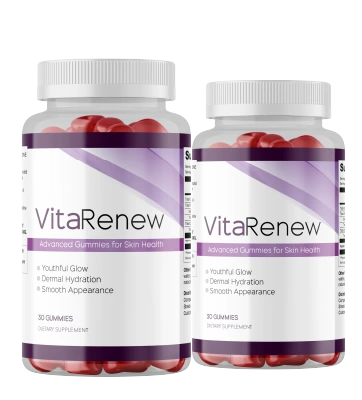
VitaRenew
Vitamin C, zinc, and copper in one daily gummy. Formulated for women 40+. Made in an FDA-registered, GMP-certified facility. 60-day money-back guarantee. One-time purchase — no subscription.
The cofactors your dermis runs on — delivered consistently.
60-day money-back guarantee · Supports skin, hair and nailsBackground reading
- Cosgrove MC et al. "Dietary nutrient intakes and skin-aging appearance among middle-aged American women." American Journal of Clinical Nutrition, 2007.
- Pullar JM, Carr AC, Vissers MCM. "The Roles of Vitamin C in Skin Health." Nutrients, 2017.
- Rucker RB et al. "Copper, lysyl oxidase, and extracellular matrix protein cross-linking." American Journal of Clinical Nutrition, 1998.
- Ogawa Y et al. "Zinc and skin disorders." Nutrients, 2018.
- Varani J et al. "Decreased collagen production in chronologically aged skin." American Journal of Pathology, 2006.
- Calder PC. "Omega-3 fatty acids and inflammatory processes: from molecules to man." Biochemical Society Transactions, 2017.