Skin Health · Explainer
The Surprising Link Between Common Medications and Crepey Skin
Many women notice their skin changing texture after years on a long-term medication. The connection is documented — but it points to something deeper than the drug itself, and that's where things get interesting.

It often arrives as a question whispered at a doctor's appointment, or typed quietly into a search bar late at night: could my medication be doing this to my skin? For women in their forties and fifties managing a chronic condition — high blood pressure, thyroid imbalance, joint inflammation, elevated cholesterol — this is not an unusual concern. The skin on their hands, forearms, and neck has acquired a papery, crinkled quality that feels new. And they started a medication around the same time it appeared.
The short answer is that certain medications are indeed associated with structural changes in the skin. But the full answer is more nuanced, and for most women, it reveals something far more actionable than "stop the medication."
Which medications have been associated with skin texture changes
The most well-documented association involves corticosteroids. Prolonged use of oral or topical corticosteroids — prescribed for conditions ranging from asthma to rheumatoid arthritis to inflammatory skin conditions — is linked in dermatological literature to a reduction in dermal thickness. The mechanism is direct: corticosteroids suppress fibroblast activity, and fibroblasts are the cells responsible for producing collagen and elastin. Reduce their activity, and the structural scaffolding of the dermis weakens over time.
The effect is most visible on areas where the skin is already thin — the backs of the hands, the inner forearms, the shins. These are precisely the areas where crepey texture most commonly develops regardless of medication, which points toward something important: the medication isn't creating a new vulnerability so much as accelerating one that already exists.
Other drug classes are sometimes mentioned in this context, though the evidence is less direct. Anticoagulants (blood thinners) don't affect collagen production but do affect capillary fragility, which can make skin look more translucent and bruise more easily — a different change, but one often confused with crepey texture. Some women on long-term thyroid replacement therapy note skin changes, likely related to how thyroid hormones regulate skin cell metabolism and moisture retention rather than any direct structural effect. And statins, used to manage cholesterol, are occasionally implicated in skin dryness that can accentuate the appearance of crepey texture without necessarily causing it.
In most cases, the medication accelerates a structural process that was already underway — it doesn't start it from scratch. That distinction changes what you can do about it.
The structural process that was already underway
Understanding why this matters requires a brief tour of what the dermis actually does and how it changes with age. The dermis — the layer of skin just beneath the surface you can touch — is composed primarily of collagen fibres, elastin fibres, and a gel-like substance called hyaluronic acid. Together, these three components give skin its thickness, its ability to snap back after stretching, and its plump, hydrated appearance.
Collagen production peaks in the mid-twenties and declines by roughly one percent per year after that. For most of the thirties, this loss is imperceptible. Then, usually in the early to mid-forties, a second force enters: declining estrogen. Estrogen plays a meaningful role in maintaining collagen density in skin, and as levels fall through the perimenopausal years, the rate of collagen degradation outpaces the rate of production more noticeably. The skin becomes visibly thinner, less firm, and more likely to develop the crinkled texture that gives crepey skin its name.
A corticosteroid prescribed during this same window doesn't cause this process — it adds pressure to a system that was already losing ground. For women who began a long-term medication in their forties, the timing can make the medication feel like the cause when the truth is that the two processes are running simultaneously.
Why the dermis is where the real conversation happens
Most women's first instinct when they notice crepey texture is to reach for a topical product — a firming cream, a body lotion with collagen peptides, a retinol formulation. These products reach the epidermis, the outermost layer of skin. They can improve surface hydration and temporarily reduce the appearance of fine lines. They cannot meaningfully reach the dermis, where the actual structural change is occurring.
This is why women who are genuinely diligent about skincare — daily moisturizing, SPF, an investment-grade regimen — still find crepey texture developing on their arms and legs. The surface is well-maintained. The dermis is an entirely different conversation.
It's also why switching or stopping a medication is rarely the dermatological recommendation. The structural change that has already occurred in the dermis doesn't reverse when the medication stops. The more productive question is: what supports the dermis in doing its work more effectively going forward?
The cofactors that skin structure actually depends on
Collagen doesn't assemble itself. The fibroblasts that produce it require specific micronutrients to carry out each step of the manufacturing process — and deficiencies in any of them produce structurally weaker output, even when the raw cellular machinery is intact.
Three cofactors are particularly well-established in the biochemistry of skin:
- Vitamin C. Two enzymes critical to the collagen assembly process — prolyl hydroxylase and lysyl hydroxylase — are entirely dependent on vitamin C as a cofactor. Without adequate levels, each collagen molecule is built with a structurally inferior architecture that cannot properly integrate into the tight fibrous network the dermis depends on. This is not a supplement marketing claim; it is foundational biochemistry confirmed in peer-reviewed literature for decades. It is also why scurvy — the extreme form of vitamin C deficiency — produces a specific and dramatic breakdown of skin and connective tissue.
- Copper. Once collagen and elastin fibres are produced, they need to be cross-linked into a resilient, organized network. That process is catalyzed by an enzyme called lysyl oxidase — and lysyl oxidase requires copper as its metal cofactor. Fibres that form without adequate copper for cross-linking are physically weaker and less elastic than properly formed fibres, even if the production rate is the same.
- Zinc. Zinc supports normal keratinocyte turnover and plays a role in the continuous dermal repair processes that occur beneath the surface throughout life. It is also involved in the regulation of matrix metalloproteinases — the enzymes that break down old collagen — helping ensure that degradation and replacement remain appropriately balanced. Zinc deficiency manifests quietly; its skin effects accumulate gradually rather than announcing themselves loudly.
The practical implication for women dealing with crepey texture — whether or not medication is a contributing factor — is that the body's collagen production system is only as effective as the cofactors available to it. Adequate raw material (collagen peptides) without adequate cofactors produces incomplete results. The factory needs its tools, not just more raw material.
Referenced in this article
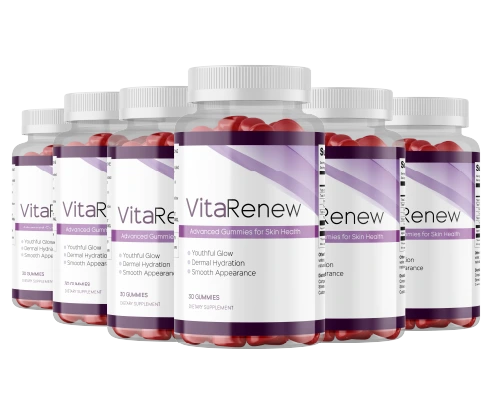
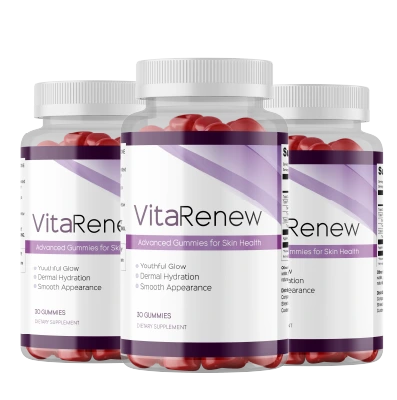
VitaRenew
A daily gummy formulated around the three cofactors skin structure depends on — vitamin C, copper, and zinc. Made in an FDA-registered, GMP-certified facility in the USA. The 2-bottle kit is the lowest-risk way to evaluate whether it makes a difference for you.
For the skin that's doing its best with what it's been given.
60-day money-back guarantee · One-time purchase, no subscriptionWhat people managing long-term medications report
"I've been on a corticosteroid for three years for a joint condition. I noticed my forearm skin getting very thin and papery. I started focusing on the vitamin C and zinc side of things — food first, then a supplement. After a few months the texture on my forearms still isn't perfect, but the fragility feels different. Less like crepe paper, more like actual skin."
"My doctor said the skin thinning from my medication wasn't reversible, but that supporting the dermis from within was a reasonable approach. I've been on VitaRenew for about four months and the change is real — not dramatic, but real. The skin on the backs of my hands feels different."
These statements reflect individual experiences. Results are not typical and will vary from person to person.
How long before anything is noticeable
The epidermis — the outermost skin layer — turns over every four to six weeks. The dermis operates on a much longer cycle. Dermatological studies measuring collagen remodeling outcomes typically run for eight to twelve weeks at minimum, and meaningful structural change often takes longer than that to become visible on the surface.
For women whose skin has been affected by long-term corticosteroid use, the timeline may be longer still, and the goal is supporting the dermis in whatever capacity it retains rather than expecting a return to a previous state. Progress is measured in skin that moves differently when you pinch it, in texture that feels less papery when you run a hand over your forearm, and in photographs taken in consistent lighting that allow you to see change your eyes have adapted to miss.
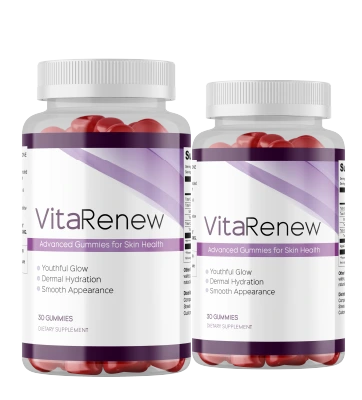
The 2-bottle kit — two months of supply — is a reasonable starting point. It's the lowest entry cost, and the 60-day guarantee means you can evaluate whether the approach is doing anything meaningful before committing to a longer trial. This is the right way to test something that works on the timescale of the dermis.
Product referenced above
VitaRenew
Vitamin C, copper, and zinc in a daily gummy. Supports skin, hair, and nails. Manufactured in the USA. No autoship.
Two months to see what your dermis can do with the right support.
60-day money-back guarantee · Supports skin, hair and nails