Why your skin loses firmness after 40 — and what the research points to


It tends to creep up slowly. One day you notice your skin looks a little tired even after a full night's sleep, or that the line you used to see only when you smiled now lingers. You reach for a richer moisturizer, maybe a serum with a promising label. It helps the surface feel softer — but the firmness you're actually missing doesn't quite come back.
There's a reason for that, and researchers have understood it for a while. The quality most people mean when they say "firm, youthful skin" comes largely from collagen — the protein that forms the scaffolding underneath your skin. And after our twenties, that scaffolding starts to thin out on a predictable schedule.
What's actually happening under the surface
Collagen is the most abundant protein in the body, and in skin it acts like the framework of a mattress: it's what keeps everything supported, springy, and smooth. Studies estimate that from our mid-20s onward we lose roughly 1% of our collagen each year, and the drop accelerates for women around menopause. Less collagen underneath means skin that looks thinner, creases more easily, and takes longer to snap back when you pinch it.
Two types matter most for skin specifically — Type I and Type III collagen. They're the structural fibers that give the surface its density and bounce. As they decline, the change shows up first in the places skin is thinnest: around the eyes, the cheeks, the neck, the backs of the hands.
Why creams can only do so much
Topical products work on the outermost layer of skin — they hydrate, smooth, and protect, which genuinely helps how skin feels. But the firmness you're missing comes from a layer deeper than most creams can meaningfully reach. That's why a good moisturizer can leave skin soft and still not restore that supported, bounce-back quality. To support the structure itself, the body needs the raw materials to keep building collagen — and it needs a specific helper to do it.
That helper is vitamin C: without it, the body simply can't assemble new collagen. Research on hydrolyzed collagen peptides — collagen broken into small, absorbable pieces — suggests that supplying those building blocks alongside the right cofactors can support the skin's own collagen-making process from the inside.
What we suggest looking into
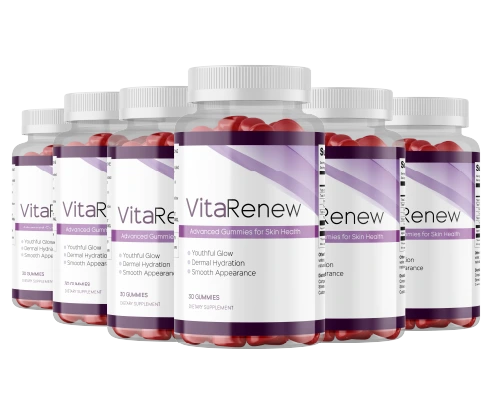
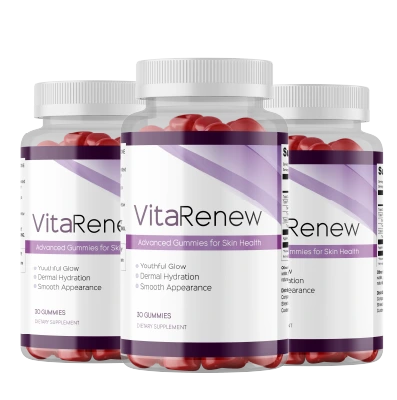
One approach that reflects this research is VitaRenew — a daily gummy built around the idea of supporting your skin's structure from within, not just its surface:
- Type I & III collagen peptides — the two types tied to skin firmness and density.
- Paired with the cofactors that matter — vitamin C (which the body needs to build collagen), plus hyaluronic acid and silica to support skin, hair and nails.
- One simple scoop a day — unflavored powder that stirs into coffee, tea or a smoothie; no pills to swallow.
- Third-party lab tested — and made without gluten, soy, dairy or GMOs.
It isn't a medication and it won't erase years overnight — but as a daily way to support the structure behind firm, hydrated skin, it's a sensible place to start. In its own research summaries, most people report more hydrated skin within 2–4 weeks, with changes in texture typically appearing between 4 and 12 weeks.
Referenced in this article
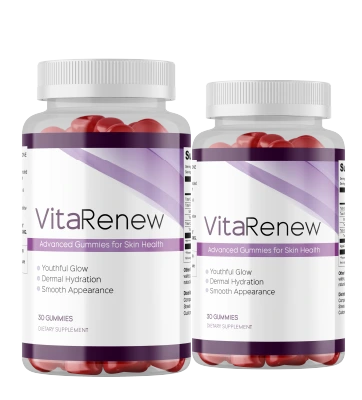
VitaRenew
The cofactors your skin's repair process actually runs on — vitamin C, zinc and copper, in one daily gummy.
For the morning your skin holds itself the way it used to.
60-day money-back guarantee · One-time purchase, no subscriptionWhat people report
"I stopped expecting much from anything in a tub. A month in, my skin just looks less tired — it holds itself better."
"The easiest part is that I just stir it into my morning coffee. My nails stopped splitting first, then my skin felt more hydrated."
These statements reflect individual experiences. Results are not typical and will vary from person to person.
The bottom line
If your skin feels less firm than it used to, it's worth looking past the surface and at the collagen structure underneath — which naturally thins with age. Supporting it with steady habits, sun protection, and, if you choose, a daily collagen supplement built around Type I & III peptides and vitamin C is a low-risk, sensible place to begin. And any sudden change in your skin is always worth mentioning to your doctor or dermatologist.