Why you look older than your age — what changes first, and why


There is a particular kind of quiet you feel at a form asking for your date of birth, or when someone mentions an age bracket and you realise they meant you. Nothing has happened. Nobody has been unkind. You just register that the number people would guess is not the number on your licence.
It is worth saying plainly: caring about this is not vanity. How a face reads is how a room treats you before anyone speaks, and there is nothing shallow about noticing that.
What is interesting is that when researchers test what actually drives perceived age, the answer is not the thing most people spend money on. It is not the depth of individual lines. In studies where observers estimate age from photographs, the strongest predictors are evenness of skin tone and how firmly the skin sits over the bone — whether the jawline holds, whether the area under the eyes stays supported.
Both of those are structural. Neither is something a cream can reach, because both are happening in a layer creams do not get to.
The part almost nobody explains
Skin gets its firmness from collagen — the protein scaffolding under the surface. From our mid-twenties we lose roughly 1% of it a year, and the rate picks up for women through their forties. Less scaffolding means skin that sits differently: it creases sooner, settles lower, and takes longer to spring back.
Here is the part that gets skipped. Your body does not build collagen out of collagen. It builds it out of amino acids, using enzymes that only work when specific cofactors are present. Vitamin C is the best documented of them — the enzymes that stabilise a collagen strand cannot complete the job without it. Zinc and copper play supporting structural roles.
Which is why so many people take collagen and feel like nothing happened. It is not that the idea was wrong. It is that the raw material arrived without the tools that turn it into structure.
What the research actually supports
- Sun protection, daily. Nothing else you do matters as much.
- Enough protein — collagen is built from what you eat.
- Sleep and blood sugar stability, both of which affect repair.
- The cofactors above, if your diet is short on them.
None of this is dramatic. All of it is boring and well established, which is usually the sign that something is real.
Referenced in this article
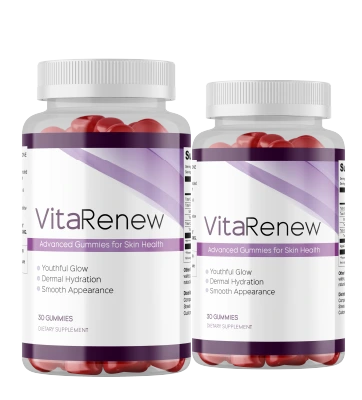
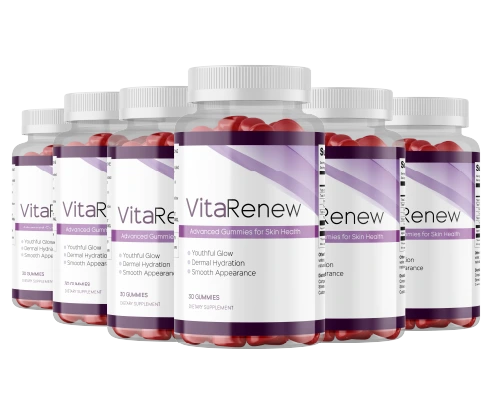
VitaRenew
The cofactors your skin's repair process actually runs on — vitamin C, zinc and copper, in one daily gummy.
For the day the guess finally lands on the right number.
60-day money-back guarantee · One-time purchase, no subscriptionA realistic timeline
The outer layer of skin turns over every four to six weeks, so surface texture shifts first. The dermis is slower — collagen remodelling is measured in months. Most controlled studies of skin-directed supplements report their outcomes at eight to twelve weeks for exactly that reason.
So give anything you try a full three months, take an honest photograph in the same light on day one, and expect gradual rather than dramatic. Individual results vary, and no supplement replaces sun protection, sleep or a decent diet.
The bottom line
If people read you as older than you are, the honest answer is usually not that you need a stronger cream. It is that the structure underneath has thinned, which happens to everyone on roughly the same schedule. Supporting it is slow, unglamorous work — sun protection, protein, sleep, and the cofactors collagen synthesis actually depends on. And any sudden change in your skin is worth mentioning to your doctor.
What people report
"I stopped chasing the lines and started thinking about the structure. Six weeks in, the thing I notice is my jaw looks like mine again."
"My sister and I are two years apart. She always looked younger. That gap has closed a bit, and I will take it."
These statements reflect individual experiences. Results are not typical and will vary from person to person.